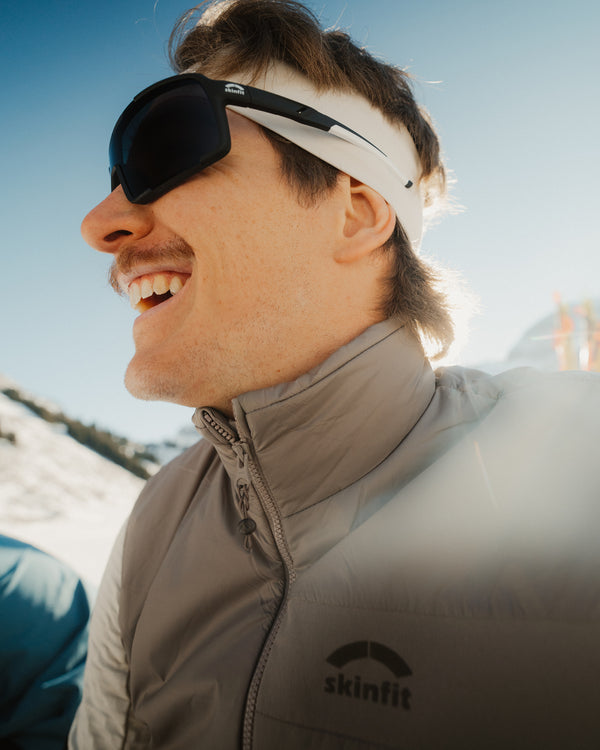
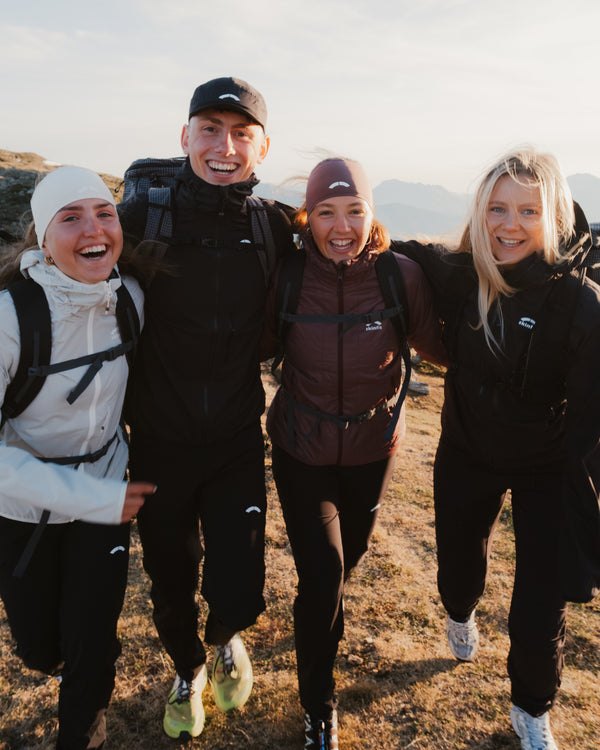
In changeable mountain weather, several thin, combinable layers are usually more sensible than a single very warm garment. A breathable base layer, a regulating mid-layer, and wind, warmth, and moisture protection can be put on or taken off according to intensity, temperature, and weather.
Why mountain weather requires a flexible system
During the ascent, the body produces a lot of heat. At the summit, during a break, or in the wind, it can cool down quickly. At the same time, sun, clouds, rain, and dropping temperatures can change within a single tour.
The right clothing must therefore fulfill two tasks: wicking away excess heat and moisture during movement and protecting against wind, cold, and precipitation when needed.
The foundation: wicking moisture away from the skin
The first layer sits directly on the skin. It should fit snugly enough to absorb moisture and transport it rapidly to the outside. A wet, heavy base layer increases the risk of cooling down during breaks.
During high-intensity activity, breathability counts more than maximum warmth. Therefore, it is better to start slightly too cool rather than already overheated.
The middle: regulating or insulating
A light mid-layer complements the base layer when it gets cooler. Depending on the material, it can primarily regulate moisture or trap additional warmth.
An insulation jacket should be in your backpack for low temperatures or longer breaks. It does not need to be worn during the entire ascent.
The exterior: blocking wind and precipitation effectively
Wind protection is often the first sensible layer of defense in alpine terrain. A light, breathable wind layer prevents cooling without shielding the body as heavily as a waterproof hardshell.
In sustained rain, snowfall, or strong wind, a weather protection layer is necessary. A hardshell provides good protection but can feel warmer and less vapor-permeable than a lighter wind layer during strenuous activity.
Practical combination for a day tour
Wear a functional base layer. Add a light mid-layer when it’s cold. Pack a wind layer so it’s easily accessible and a weather protection jacket if the forecast is uncertain. In low temperatures, a compact insulation layer should also be included.
A hat or headband and light gloves take up little space but significantly change thermal comfort.
How to make decisions during the tour
Check three signals regularly: Is your back becoming noticeably damp? Can you already feel the wind through your current layer? Is a break or an exposed section coming up? This usually makes it clear whether you should take off a layer, add wind protection, or secure warmth.
Do not wait until you are sweating heavily or freezing. Good regulation begins a few minutes earlier. Therefore, pack protective layers in your backpack so that you can reach them quickly.
Conclusion
There is no rigid outfit for changeable mountain weather. A flexible layering system is correct if you can adjust individual layers quickly without overheating during exertion or cooling down during breaks.
Frequently asked questions
How many layers do I need on the mountain?
Usually, a base layer, mid-layer, and outer layer form the foundation. Depending on the cold, an additional insulation layer can make sense.
Should I be cold at the start?
Starting off slightly cool can be sensible during an intense ascent. However, freezing severely is not the goal.
Do I always need a hardshell?
If there is a possibility of precipitation or for exposed tours, reliable weather protection should be brought along. In stable conditions, a light wind layer may suffice.
What should I wear during a break?
Put on a dry insulation or weather protection layer early, before you start to cool down.