For a ski tour, you need breathable clothing for the strenuous climb and reliable protection for the summit, breaks, and the descent. Functional underwear, a light midlayer, a wind-resistant layer, a compact insulation jacket, and—depending on the weather—a hardshell are sensible choices.
Ascent and descent have different requirements
A lot of body heat is generated during the ascent. Clothing that is too thick quickly leads to heavy sweating. At the summit and during the descent, the exertion level drops, while wind and wind chill increase.
Good ski touring clothing can therefore be adjusted on the go. The goal is not maximum warmth, but the most consistent climate management possible.
Base Layer and Mid Layer: the breathable foundation
A functional base layer transports moisture away from the skin. A light, breathable midlayer can be worn over it. In mild conditions, this combination is often sufficient for the sheltered part of the ascent.
Open zippers early and remove a layer before you start sweating heavily. Damp clothing cools down faster during breaks.
Top Layer: wind protection for exposed sections
A light wind layer is particularly versatile on many ski tours. It provides protection on ridges and in windy sections, but remains more breathable and compact than full weather protection.
For the ascent, wind protection is often more sensible than a thickly padded jacket.
Insulation Layer and Top Layer: warmth and weather protection
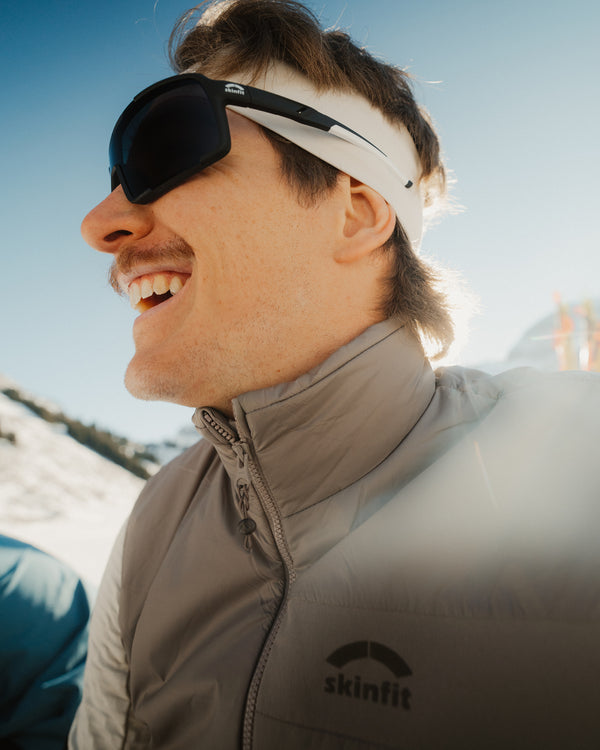
A compact insulation jacket is primarily used at the summit, during longer stops, or in very cold temperatures. It retains heat and should be quickly accessible.
A hardshell is essential in case of snowfall, strong winds, or uncertain weather conditions. For the descent, it can be worn over the other layers.
Don't forget legs, hands, and head
Flexible, breathable touring pants are usually more comfortable for the ascent than heavily insulated ski pants. In adverse conditions, overpants provide additional protection.
Light gloves for the ascent and warmer gloves for the summit and descent are a proven combination. A hat, headband, or helmet liner complements the system.
An exemplary layering combination
For a brisk ascent, we often start with a base layer, light midlayer, and flexible pants. In windy conditions, a light top layer completes the outfit. The insulation layer initially remains in the backpack.
At the summit, we put on the insulation layer as soon as possible. For the descent, a protective top layer is used additionally, depending on the wind, snowfall, and temperature. This combination is an example and must be adapted to individual sensitivity to cold, pace, and the weather.
Conclusion
Ski touring clothing works best as an adaptable system: light and breathable going uphill, protective and warm for wind, breaks, and the descent. Our Skinfit Layering System assigns these tasks to the modules Base Layer, Mid Layer, Insulation Layer, Top Layer, and Pants.
Frequently asked questions
Which jacket should I wear during the ascent?
Usually, a light breathable or wind-resistant layer is sufficient. A heavily insulated jacket is often too warm during intense activity.
Do I need an insulation jacket?
In winter conditions, a compact insulation jacket is very sensible for breaks, the summit, and emergencies.
Do I need two pairs of gloves?
A thin pair for the ascent and a warm pair for the descent and breaks increase comfort and safety.
When do I need a hardshell?
During snowfall, strong winds, wet precipitation, or an uncertain forecast.