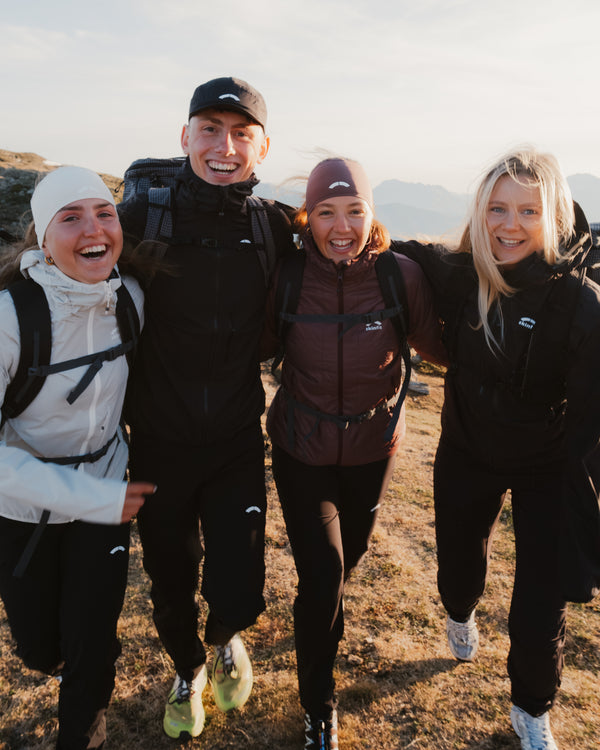
For intense mountain tours, lightweight, breathable and quick-drying functional clothing is the right choice. It should wick moisture away from the skin, offer freedom of movement and be supplemented by a separately carried wind, insulation or weather protection layer.
At high intensity, moisture management is crucial
Climbing fast produces a lot of heat and sweat. If moisture stays directly on the skin or a heavy fabric becomes soaked, the risk of getting cold when the pace changes or during a break increases.
That is why a functional Baselayer should not simply be thin. It has to spread moisture, dry quickly and stay comfortable under a backpack and additional layers.
As little as possible, as much as necessary
Starting out too warm is one of the most common clothing mistakes. Adjust your clothing before you start sweating: push up your sleeves, open the zipper or take off a layer.
In warm conditions, a light shirt or long sleeve and flexible pants are often enough. Protective layers stay within reach in your backpack.
Wind protection before insulation
After an intense climb, even a moderate wind feels much colder. A light wind vest or wind jacket can greatly reduce heat loss without adding unnecessary insulation.
Only when temperature, length of break or pace require it do you add a warming layer.
Material, fit and details
Look for breathable, quick-drying materials and enough freedom of movement. Flat seams, well-placed pockets and a cut that does not slip under a backpack improve comfort.
The best membrane or the lightest material is of little use if the fit restricts movement or several layers do not work together.
Our most important rule under high exertion
We try not to let moisture build up unnecessarily in the clothing system in the first place. That is why we start intense tours dressed rather lightly, use ventilation options and adjust our pace or layers early.
The goal is not to stay completely dry. Sweating is normal at high output. Good functional clothing helps to spread moisture, release it faster and limit the heat loss that follows.
Conclusion
On sweaty mountain tours, your clothing should regulate heat and moisture instead of wrapping up your body as much as possible. Light functional layers plus separately carried protection are more versatile than an outfit that is constantly too warm.
Frequently asked questions
Is cotton suitable for intense mountain tours?
Cotton holds a lot of moisture and dries slowly. For intense alpine activity, quick-drying functional materials are usually more suitable.
Should functional underwear fit tightly?
It should fit close to the body without restricting freedom of movement or comfort.
What do I put on at the summit?
Put on wind or warm protection right away, before your sweaty body cools down.
Does a hardshell make sense on a fast ascent?
Only if you really need the weather protection. Otherwise, a lighter, more breathable wind layer can be more comfortable.