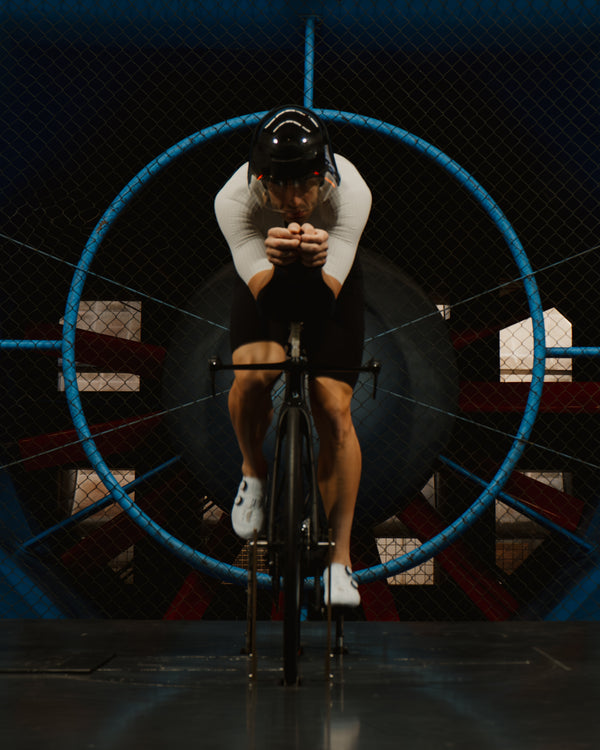
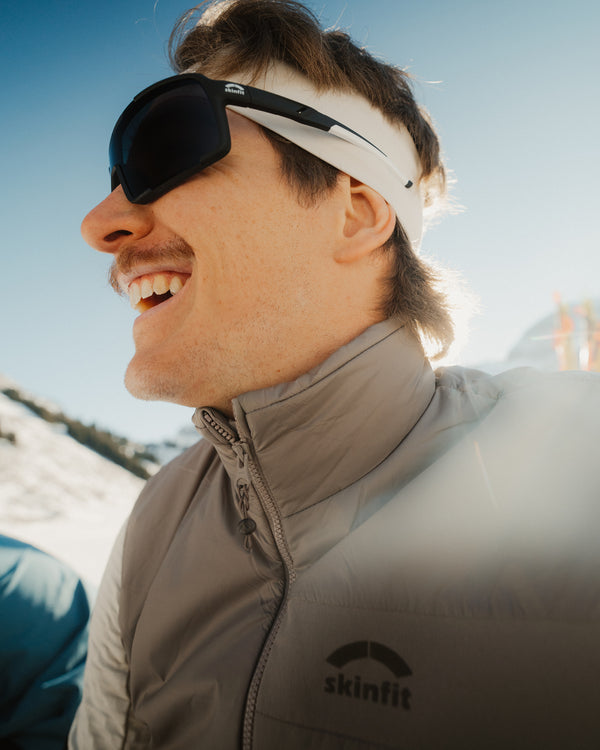
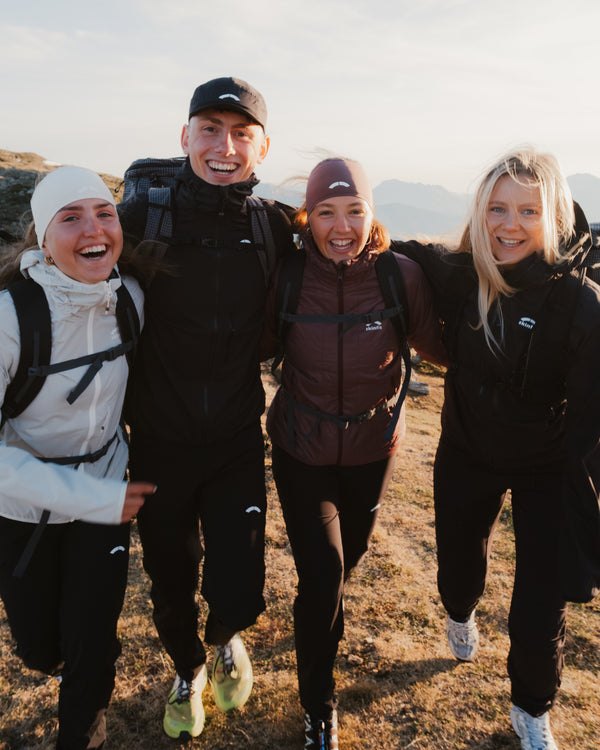
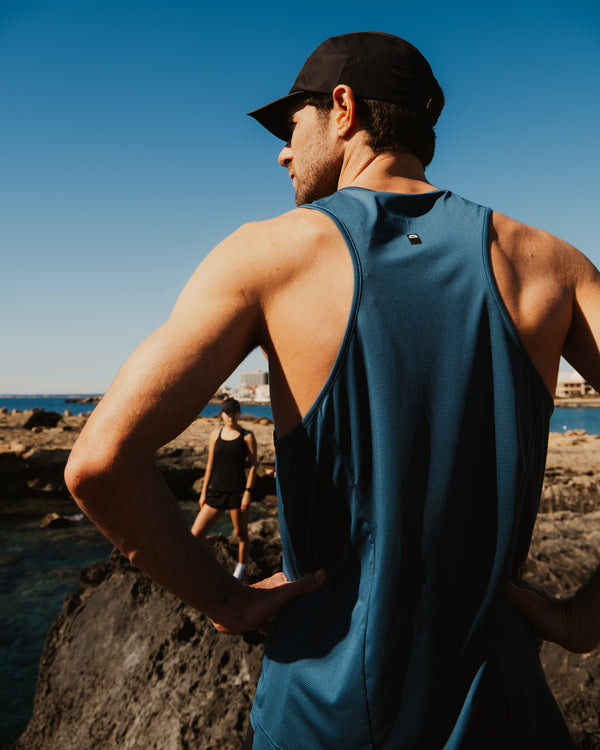
Many functional layers can be used across different sports, provided the fit, protection, and details are suitable for the respective activity. Baselayers, midlayers, wind protection, and insulation jackets are particularly versatile; sport-specific items include things like padded cycling shorts or technical hardshell trousers.
Function over sports labels
The body has similar requirements across various endurance sports: dissipating heat, wicking away moisture, and protecting against wind, cold, or precipitation when needed.
This is why not every piece of clothing needs to be assigned to only one sport. The deciding factors are intensity, temperature, weather, and the required freedom of movement.
These layers are particularly versatile
Functional underwear can be used for running, hiking, cycling, and ski touring. The same applies to light midlayers, wind vests, wind jackets, and compact insulation jackets.
For example, a light wind vest can serve the same purpose in road cycling, trail running, and alpine climbing: protecting the torso from cooling down.
Where specialized products remain useful
Contact points and movement patterns differ. On a road bike, padded cycling shorts improve comfort. For trail running, short, lightweight trousers and easily accessible pockets can be important. On a ski tour, trousers need to be robust, flexible, and offer protection from snow.
Multisport does not mean that every item performs equally well for everything. It means covering as many shared functions as possible with few items and using specialized pieces only where they provide a real advantage.
The layering principle
We organize clothing functions into five modules: Base Layer, Mid Layer, Insulation Layer, Top Layer, and Pants. These modules are not rigidly assigned to one sport, but combined according to the intensity and conditions.
This reduces duplicate purchases, simplifies your gear, and ensures that familiar products are used more frequently.
How to assemble a versatile basic kit
Start with the items you can combine most often: a suitable base layer, a light mid layer, a compact wind or weather protection, and an insulation layer for cool conditions.
After that, add sport-specific pants or specialized products. This way, you create a robust foundation first, rather than a collection of individual outfits that can hardly be combined with each other.
Conclusion
The same functional clothing can work for many sports. Especially the base and complementary layers are versatile. Specialized products remain useful where seating position, abrasion, weather protection, or safety impose specific requirements.
Frequently asked questions
Can I wear a running jacket for cycling?
Yes, if the cut, back length, and wind protection suit the riding position. A bike-specific jacket may be more comfortable for frequent rides.
Can I use a mountaineering midlayer for ski touring?
In many cases, yes. The deciding factors are breathability, freedom of movement, and how it combines with other layers.
What is important when buying for multisport?
Choose versatile base, wind, and thermal layers first. Only add specialized products for requirements that cannot be met in a meaningful way otherwise.